BackerGuardian Trust Meter rates Argon ONE UP: An Open Source ARM Laptop for the Community as Low Risk (Score: 81/100). Low risk profile - proceed with standard diligence
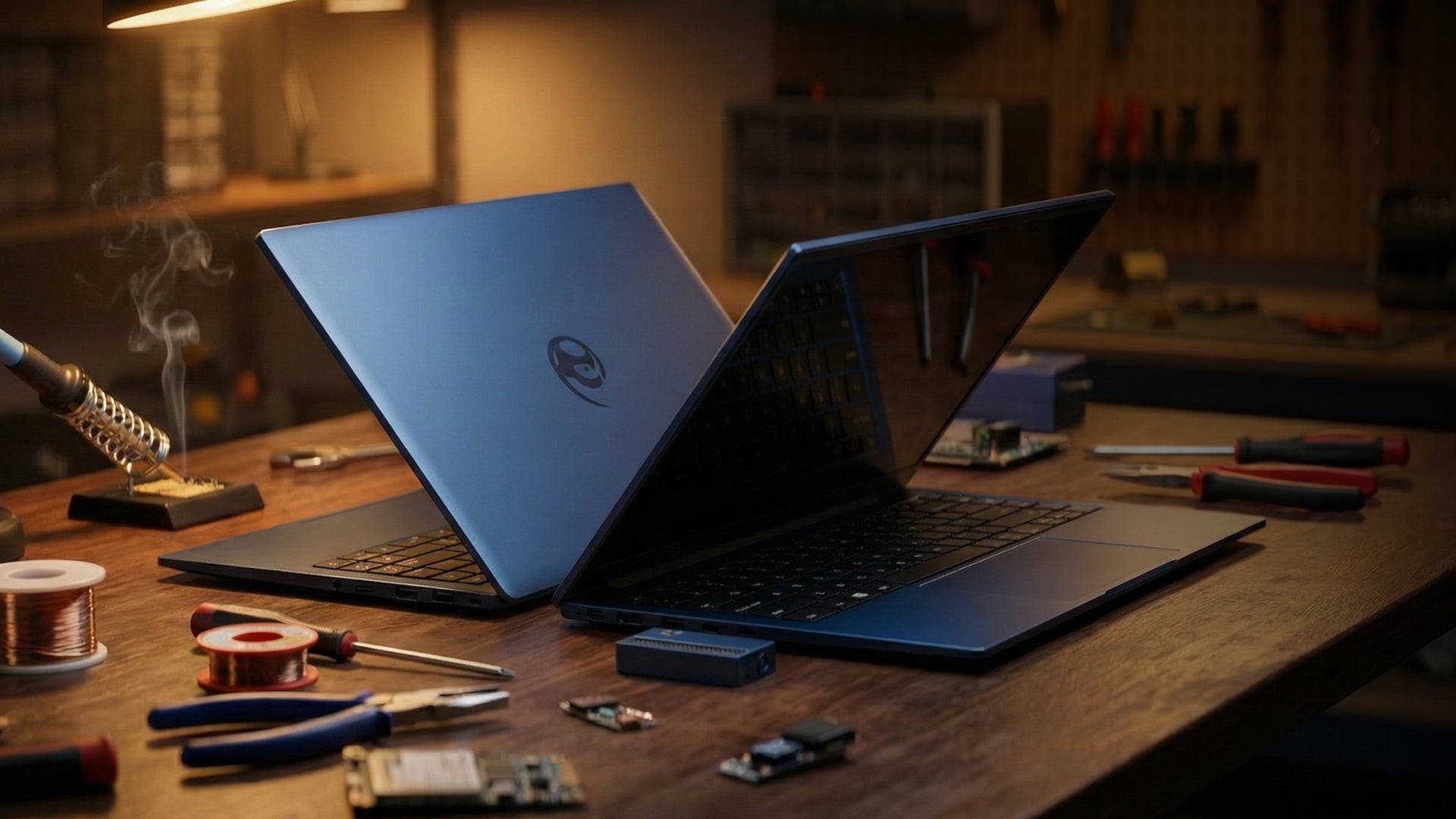
Argon ONE UP: An Open Source ARM Laptop for the Community
Forensic Analysis
Trust Meter™ Analysis
Low risk profile - proceed with standard diligence. Validated by forensic analysis.
Secure redirection to official campaign
Product Analysis
technical_review.mdArgon ONE UP: An Open Source ARM Laptop for the Community
Executive Summary
The Argon ONE UP by Argon Forty is a 14-inch laptop built around the Raspberry Pi Compute Module 5. Its Kickstarter campaign ran 2025-08-05 to 2025-09-02 and raised HK$2,893,342 (≈US$370,000) from 979 backers against a HK$12,400 goal, per the Kicktraq mirror of the campaign page. Units shipped to backers from early February 2026 — about four months behind the promised October 2025 — and the laptop then went on general retail sale.
BackerGuardian Trust Score: 81/100 (Low Risk) — last computed 2026-07-21.
Product Specifications
Verified against CNX Software's launch coverage and the Argon40 product listing (2026-07-27).
| Specification | Details |
|---|---|
| Creator | Argon Forty |
| Platform | Kickstarter (ended 2025-09-02, funded) |
| Compute | Raspberry Pi Compute Module 5 (BCM2712, quad-core Cortex-A76) — sold separately in the shell version |
| Display | 14-inch IPS, 1920x1200 @ 60 Hz |
| Storage | M.2 2280 NVMe slot (PCIe Gen3 x1), microSD |
| Battery | 55 Wh (4,800 mAh) |
| Chassis | Full aluminum, built-in cooling fan, backlit keyboard |
| Ports | 2x USB 3.1 Type-A, 2x USB-C (PD + OTG/GPIO), HDMI 2.0, 3.5mm audio |
| GPIO | Raspberry Pi 40-pin access via bundled module |
| Camera/audio | 2MP 1080p webcam, dual microphones, stereo speakers |
Pricing History
The campaign is over; these are the recorded price points, not live offers.
| Configuration | Kickstarter (Aug 2025) | Argon40 store (2026-07-27) |
|---|---|---|
| Laptop shell (no CM5/SSD) | HK$2,591 ≈ US$330 | US$450, sold out |
| Core: 8GB CM5 + 256GB NVMe | ≈US$400–420 | US$600, sold out |
A shell buyer must add a CM5 (about $129 retail, per Notebookcheck), NVMe storage, and a 45W USB-C power supply.
Who Is This For?
- Developers who want real 40-pin GPIO access in a laptop — the ONE UP's genuine differentiator among Pi portables.
- Raspberry Pi users who want a repairable, CM5-swappable aluminum machine and accept the platform's software limits.
- Buyers happy to source their own CM5 and SSD to control the total price.
Who Should Wait?
- Anyone who needs sleep mode: the platform cannot sleep, and reviewers measured the battery draining in about 17 hours at idle with the lid closed (Hackaday).
- Value-first buyers: at $450–600 plus parts, used x86 laptops outperform it.
- Anyone shopping right now — both configurations were sold out at our 2026-07-27 check, and pricing has risen twice since the campaign.
Forensic Trust Report™
Validating claims with investigative rigor
Quick Verdict
As of 2026-07-27, the Argon ONE UP scores 81/100 (Low Risk) on the BackerGuardian Trust Meter: an established Raspberry Pi accessory maker whose Compute Module 5 laptop raised HK$2,893,342 (≈US$370,000) from 979 backers, shipped roughly four months behind its October 2025 promise, and now has working production units in backers' and reviewers' hands.
What This Record Corrects
An earlier version of this record carried figures we can trace to no source: $450,000 USD pledged, 2,800 backers, a $50,000 goal, a 2026-01-20 deadline, $199/$299 reward tiers, a 72 Wh battery, and "Pi 5 compatible." The verified campaign — per the Kicktraq mirror of the Kickstarter page — ran 2025-08-05 to 2025-09-02, raised HK$2,893,342 against a HK$12,400 goal (about 23,300% funded) from 979 backers, and priced its early-bird shell at HK$2,591 (≈US$330). The battery is 55 Wh, and the machine takes a Raspberry Pi Compute Module 5, not a standard Pi 5 board. The old capsule also quoted "80/100" against a stored score of 81 — the prose now matches the score file. The trust score itself was not edited; scores change only through the scoring machinery.
Trust Dimension Breakdown
Overall: 81/100 — Low Risk ("Low risk profile - proceed with standard diligence", Trust Meter v2.0, last updated 2026-07-21).
| Dimension | Score | Weight | Stored evidence note |
|---|---|---|---|
| Creator Credibility | 85 | 30% | Argon Forty is known Pi accessory maker; previous products delivered |
| Product Authenticity | 80 | 25% | Original laptop shell design |
| Technical Feasibility | 85 | 20% | Pi laptop shells proven category |
| Supply Chain | 75 | 15% | February 2026 delivery (NOW) |
| Communication | 75 | 10% | Good backer updates |
Kill switches triggered: none. One honest caveat on this table: the stored Supply Chain note reflects this record's pre-correction delivery date. The campaign's actual promise was October 2025; shipping began in early February 2026 — so the machinery's mid-band 75 happens to describe a real, materialized delay, just against the wrong baseline date.
Creator Analysis
Argon Forty (Argon 40) is not a zero-history creator. It has sold Raspberry Pi cases and accessories for years — the ONE case line began as its own Kickstarter campaign (ARGON One: The Most Versatile Raspberry Pi Mini Computer), cited here for existence, not figures, since Kickstarter blocks automated retrieval. The ONE UP was its most ambitious product to date: a full 14-inch aluminum laptop rather than a case. That category leap is where the risk sat, and the outcome is now observable — the product shipped and works, with the rough edges detailed below.
Delivery Status
Ledger state: delivered, late. The campaign promised backers delivery in October 2025. Liliputing reported on 2026-02-02 that units were shipping to Kickstarter backers — roughly four months behind promise — and XDA Developers reported on 2026-02-04 that general retail sale had opened following backer fulfillment. We have not independently audited per-backer completeness; the delivered state is inferred from the retail transition and from independent reviewers holding production units.
Early-shipment friction, per Liliputing's February coverage: recipients reported OS installation challenges, and shell-only units arrived missing thermal pads.
Independent review evidence: Hackaday's 2026-02-12 write-up of Jeff Geerling's production shell unit found it "totally functional as a laptop" with Framework-like repairability, while criticizing the Raspberry Pi platform's lack of a sleep mode (the battery drains in roughly 17 hours at idle with the lid closed), Argon40's customer-support responsiveness, and pricing that lands in budget-x86-laptop territory once you add a CM5.
Price-to-Reality
Every figure below is sourced; the campaign is over, so this is a record of how pricing moved, not a live feed.
| Configuration | Kickstarter (Aug 2025) | Retail launch (Feb 2026) | Argon40 store (2026-07-27) |
|---|---|---|---|
| Laptop shell (no CM5, no SSD) | HK$2,591 ≈ US$330 (Liliputing) | US$400 (XDA) | US$450, sold out |
| Core: 8GB CM5 + 256GB NVMe | ≈US$400–420 (CNX Software, Liliputing) | — | US$600, sold out |
A shell buyer also needs a Compute Module 5 — about $129 at retail per Notebookcheck — plus NVMe storage and a 45W USB-C power supply, none of which the shell includes. Backers got a materially better price than anyone since; retail pricing has climbed twice and stock has not held.
Who This Is For
- Developers and tinkerers who specifically want full 40-pin GPIO access in a laptop form factor — the ONE UP's genuine differentiator over other Pi portables.
- Buyers who value repairability and an all-aluminum, CM5-swappable design and accept Raspberry Pi OS-class software limits as the price of the platform.
- Anyone comfortable sourcing their own CM5 and SSD to save money over the Core System.
Who Should Pass
- Anyone who needs sleep mode or multi-day standby: the platform cannot sleep, and an idle closed-lid unit drains its battery in about 17 hours per Hackaday's review coverage.
- Buyers comparing on raw value: at $450–600 plus parts, used x86 laptops and MacBooks outperform it — you are paying for the GPIO and the openness, not for performance.
- Anyone expecting responsive manufacturer support; the strongest independent review on record flagged Argon40's support as a real weakness.
- Anyone who wants one now: both store listings were sold out at our 2026-07-27 check.
Evidence Timeline
| Date | Event | Source |
|---|---|---|
| 2025-08-05 | Kickstarter launch: HK$12,400 goal, early-bird shell HK$2,591 (≈US$330), core ≈US$400–420, delivery promised October 2025 | Liliputing, CNX Software |
| 2025-09-02 | Campaign ends: HK$2,893,342 from 979 backers, about 23,300% of goal, "Funding Successful" | Kicktraq |
| 2026-02-02 | Shipping to backers underway, about four months late; OS-install friction and missing thermal pads reported on shell-only units | Liliputing |
| 2026-02-04 | General retail sale opens at $400 (shell) after backer fulfillment; sells out | XDA Developers, Notebookcheck |
| 2026-02-12 | Independent production-unit review: functional and repairable; no sleep mode, ~17h idle battery drain, support complaints | Hackaday |
| 2026-07-21 | Trust score last computed: 81/100, Low Risk, no kill switches | Trust Meter v2.0 |
| 2026-07-27 | Our check: Argon40 store lists Shell $450 and Core System $600, both sold out; record corrected to verified campaign figures | argon40.com |
Recommendation
The 81/100 Low Risk score describes a campaign that resolved the way low-risk campaigns usually do: an experienced creator, a real product, a delay measured in months rather than years, and hardware that works as described once it arrived. The risk that remains is not fraud risk — it is product-fit risk (no sleep mode, modest performance per dollar) and availability risk (sold out at both price points as of this check). Backers who wanted a GPIO-equipped Pi laptop got one; buyers today are paying $120–180 over campaign pricing for the same machine, when they can get it at all.
Score 81/100, Low Risk. Campaign funded 2025-09-02; delivered late, from February 2026. Last verified 2026-07-27.
Related Investigations
More forensic analysis from our intelligence desk