BackerGuardian Trust Meter rates SHARE C1: World's 1st Personal 3D LiDAR Spatial Camera as Low Risk (Score: 82/100). Low risk profile - proceed with standard diligence
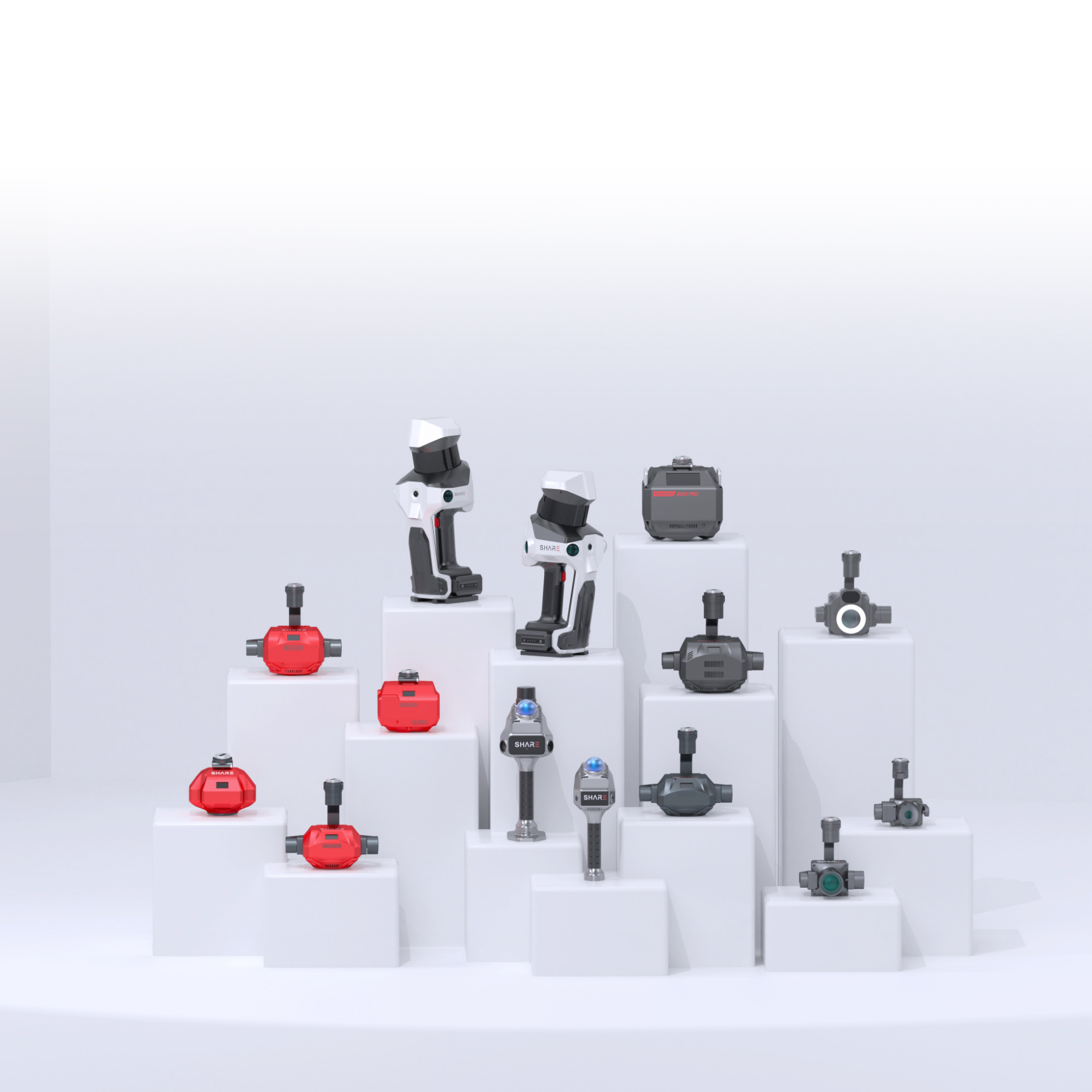
SHARE C1: World's 1st Personal 3D LiDAR Spatial Camera
Forensic Analysis
Trust Meter™ Analysis
Low risk profile - proceed with standard diligence. Validated by forensic analysis.
Secure redirection to official campaign
Product Analysis
technical_review.mdSHARE C1: Personal 3D LiDAR Spatial Camera — Overview
As of July 27, 2026, the SHARE C1 holds a BackerGuardian trust score of 82/100 (Low Risk). It is a handheld 360° LiDAR scanner from SHARE3DCAM, the consumer brand of Shenzhen survey-hardware maker Share UAV Technology, that raised HK$4,605,005 (~US$590,000) from 255 backers on Kickstarter (November 4 – December 19, 2025) and is now sold at retail for $3,999 (Kicktraq; creator's store).
Who Makes It?
SHARE3DCAM is the consumer-facing brand of Shenzhen Share UAV Technology Co., Ltd (campaign run as SHAREUAV LTD from Kowloon, Hong Kong). Distributor profiles date the company to 2016, with UAV research-lab roots at Shandong Academy of Sciences going back to 2010, and document DJI-ecosystem integration work such as the PSDK 102S aerial camera for the Matrice 300 RTK (Edinburgh Drone Company; SHAREUAV site). The company already sells industrial SLAM scanners — the S20, S20 SE, and S100 series — alongside the C1 (share3dcam.com).
The relevant trust nuance: the manufacturer is established, but the Kickstarter account was brand new with zero prior campaigns — which is why Creator Credibility (70/100) is the lowest of the record's five score dimensions.
How Does It Work?
- Scan — walk the space while the C1 captures LiDAR returns plus RGB imagery; a magnetically mounted phone shows a live preview.
- Process — SHARE PointClouds Studio on a PC registers, cleans, and colorizes the point cloud. The launch press release listed 3D Gaussian Splatting support as "coming soon"; the current Amazon US listing markets free 3DGS function usage — verify the current software state if 3DGS is your primary use case.
- Export — .las/.ply/.pcd output imports into standard tools (CloudCompare, CAD/BIM packages, game engines).
Did It Deliver?
The campaign promised January 2026 delivery. As of July 27, 2026, BG has not directly confirmed backer fulfillment (Kickstarter blocks automated reads of updates/comments). What is confirmed: the C1 is in stock at retail through the creator's own store (China/EU/US warehouses) and Amazon US, and a "C1 PRO" successor is already listed. Production is clearly real; treat backer-delivery timing as unverified rather than confirmed.
Who Should Consider It?
- Architects, interior designers, and contractors doing as-built capture and floor plans
- Real-estate and documentation work (continuous 3D walkthroughs rather than 360° photo bubbles)
- Game/VR developers and 3D artists capturing real environments
- Heritage-preservation and research users on non-survey-firm budgets
Who Should Look Elsewhere?
- Users needing survey-grade millimeter accuracy (legal boundary work, metrology)
- Robotics builders wanting a raw sensor component — note the unrelated ~$50 Slamtec RPLIDAR "C1" shares the name only
- Small-object scanning (structured-light scanners fit better)
- Tight budgets — at $3,999 retail this is a professional tool purchase, and phone-based photogrammetry remains the cheap alternative
Frequently Asked Questions
Is the SHARE C1 a rebrand of an existing product?
No evidence of that. It is a consumer-priced derivative of SHAREUAV's own industrial S20/S100 line. BG's scoring evidence attributes the core sensor to a Livox Mid-360-class LiDAR unit — a standard industry component — though the creator has not publicly confirmed the exact sensor.
Can I use the data with third-party software?
Yes. The advertised .las/.ply/.pcd exports are industry-standard formats compatible with CloudCompare, CAD, BIM, and game-engine pipelines.
What did backers pay versus retail?
The creator's pre-launch marketing advertised a $2,199 super early bird; Kicktraq's final average pledge was HK$18,059 (~US$2,300). Retail is now $3,999 — so campaign pricing ran roughly 40–45% below retail, in exchange for pre-production risk.
When did or will it ship?
Estimated delivery was January 2026. Retail units are shipping as of mid-2026; direct confirmation of backer fulfillment is still missing from this record (see Did It Deliver above).
Forensic Trust Report™
Validating claims with investigative rigor
SHARE C1 Personal 3D LiDAR Spatial Camera — Trust Report
Quick Verdict
As of July 27, 2026, the SHARE C1 by SHARE3DCAM scores 82/100 (Low Risk) on the BackerGuardian Trust Meter: an established Shenzhen survey-hardware maker repackaging proven industrial LiDAR for prosumers, with the main open question being backer-delivery confirmation, not whether the product is real. Guidance per the score band: low risk profile — proceed with standard diligence.
The campaign ended December 19, 2025, having raised HK$4,605,005 (~US$590,000) from 255 backers against a HK$77,740 goal — 5,923% funded (Kicktraq final tally). The product has since reached open retail sale, which is strong evidence production is real; direct backer-fulfillment confirmation is covered in the delivery section below.
Trust Meter Dimension Breakdown
| Dimension | Score | Weight | Rating |
|---|---|---|---|
| Creator Credibility | 70/100 | 25% | Medium-High |
| Product Authenticity | 90/100 | 25% | High |
| Technical Feasibility | 90/100 | 20% | High |
| Supply Chain Risk | 80/100 | 15% | High |
| Communication Quality | 80/100 | 15% | High |
| Overall | 82/100 | — | Low Risk |
Creator Credibility is the lowest dimension for one specific reason: the campaign ran on a brand-new Kickstarter account with zero prior campaigns. The score is rescued by the parent company being a verifiable industrial manufacturer rather than an anonymous founder — but a first-time Kickstarter account is a first-time Kickstarter account, and BG scores it as one.
What This Campaign Actually Was
The SHARE C1 is a handheld 360° LiDAR scanner that builds colorized 3D point clouds of rooms, buildings, and outdoor spaces as you walk, using SLAM (simultaneous localization and mapping) to track its own position. Claimed specs: better-than-1cm accuracy, 70m range, dual RGB cameras for colorization, and export to industry-standard formats (.las, .ply, .pcd) via the creator's PointClouds Studio desktop software (launch press release, Nov 4, 2025; current product page). The current retail listing adds detail: 200,000 points/second, 70m range at 80% reflectivity, 575g body plus 380g battery grip, up to 180 minutes of runtime.
The pitch was "pro-sumer cost-down": SHARE3DCAM's parent already sells industrial SLAM scanners (S20, S100 series) through survey-equipment channels (share3dcam.com product line); the C1 packages the same workflow at a fraction of industrial pricing. BG's scoring evidence attributes the sensor package to a Livox Mid-360-class unit — an industry-standard component, not exotic physics — which is why Technical Feasibility scored 90/100.
One naming trap worth repeating: this is not the ~$50 Slamtec RPLIDAR C1 robotics sensor. Same "C1" name, entirely different product class.
Who the Creator Is
SHARE3DCAM is the consumer brand of Shenzhen Share UAV Technology Co., Ltd, a maker of aerial oblique/mapping cameras and LiDAR scanners. Distributor profiles date the company's founding to 2016, with UAV R&D-lab roots at Shandong Academy of Sciences going back to 2010, and note DJI-ecosystem integration work such as the PSDK 102S payload for the Matrice 300 RTK (Edinburgh Drone Company distributor profile; SHAREUAV official site). BG's stored scoring evidence lists the founding as "est. 2010" — the more conservative reading of the sources is that 2010 marks the research-lab lineage and 2016 the company itself. Either way, this is an operating hardware manufacturer with existing products, not a rendering-only startup. The campaign itself was run from Kowloon, Hong Kong under SHAREUAV LTD, on a Kickstarter account with no prior history.
Evidence Timeline
- Nov 4, 2025 — Campaign launches on Kickstarter; same-day press release announces the C1 with claimed specs and formats (Yahoo Finance/ACCESS Newswire). Creator's pre-launch signup marketing advertised super-early-bird pricing at $2,199.
- Nov 5, 2025 — Campaign announces it is fully funded, one day in (Kicktraq update log).
- Dec 19, 2025 — Campaign closes: HK$4,605,005 from 255 backers, average pledge HK$18,059 (~US$2,300) — a small-backer-count, high-ticket campaign (Kicktraq).
- Jan 2026 — Creator's estimated delivery window (per the campaign at intake; BG's December 2025 intake also recorded "mass production" as the claimed prototype status).
- As of Jul 27, 2026 — The C1 is on open retail sale at $3,999.00 on the creator's own store with China/EU/US warehouse options, and listed on Amazon US. The creator's store also now lists a "C1 PRO" successor model.
Delivery Status
The campaign promised January 2026 delivery. As of July 27, 2026, BG has not directly confirmed backer fulfillment — Kickstarter blocks automated reads of the campaign's update and comment sections, and no credible third-party report of backers receiving (or not receiving) units was found in this check.
What is verifiable: the exact product is in stock at retail through the creator's own store and Amazon US, and the creator has already listed a successor model. That is strong indirect evidence that mass production happened and units ship — it would be unusual (though not unheard of) for a manufacturer to fulfill retail channels while leaving crowdfunding backers unserved. Treat backer-delivery timing as unverified rather than confirmed; if you are a backer with ground truth either way, that is exactly the data point this record is missing.
Pricing Reality
- Kickstarter super early bird: $2,199 (creator's pre-launch marketing; full tier list not independently captured).
- Average actual pledge: HK$18,059 ≈ US$2,300 (Kicktraq).
- Retail today: $3,999.00 on the creator's store.
Taken at face value, campaign backers paid roughly 40–45% below the current retail price. The usual crowdfunding caveat applies in reverse here: the discount was real only because the product shipped to retail; on a failed campaign it would have been a 100% loss. BG does not maintain verified pricing for adjacent scanners (iPhone LiDAR, Leica BLK2GO, etc.) on this record, so no comparison table is published — the earlier version of this page carried category-filler rows, which have been removed.
Who This Is For
- Architects, contractors, and renovation professionals who want walk-through site capture into CAD/BIM formats without survey-firm dayrates.
- Game/VR developers and 3D artists capturing real environments (the campaign heavily marketed 3D Gaussian Splatting output; the launch press release listed 3DGS as "coming soon," and the current Amazon listing markets free 3DGS function usage — verify current software state before relying on it).
- Prosumers who have outgrown phone-based LiDAR and can justify a ~$4,000 tool.
Who Should Pass
- Robotics hobbyists who need a bare sensor — this is a finished handheld camera, not a component.
- Anyone needing survey-grade millimeter accuracy for legal or metrology work; better-than-1cm is an architectural spec, not a machining spec.
- Buyers who require confirmed post-delivery independent reviews: third-party retail-unit coverage exists but is thin, and BG has not verified backer fulfillment.
- Small-object scanning (jewelry, miniatures) — a structured-light scanner is the right tool, not long-range LiDAR.
Kill Switch Status
Not triggered. None of the three Kill Switch criteria (direct arbitrage/reselling of an existing listed product, fabricated creator identity, physically impossible claims) were detected at intake or in this July 2026 re-verification. The device is a genuine first-party product from an identifiable manufacturer.
Record Notes
This record was re-verified and rewritten on July 27, 2026. Material corrections from the prior version: the campaign ran in HKD, not USD (HK$4,605,005 raised ≈ US$590,000 — the prior record's "US$380,000" was wrong); backer count corrected from 320 to 255; campaign end date corrected from January 15, 2026 to December 19, 2025; a filler pricing table of non-comparable products (streaming webcams, action cams) was deleted. Score and dimension values are unchanged and come from BG's scoring machinery, not this edit.
Related Investigations
More forensic analysis from our intelligence desk